
Color consistency is one of the most important quality requirements for anodized aluminum decorative profiles. In architectural applications, interior decoration, and export projects, even minor color variations can significantly affect the final appearance of an entire installation.
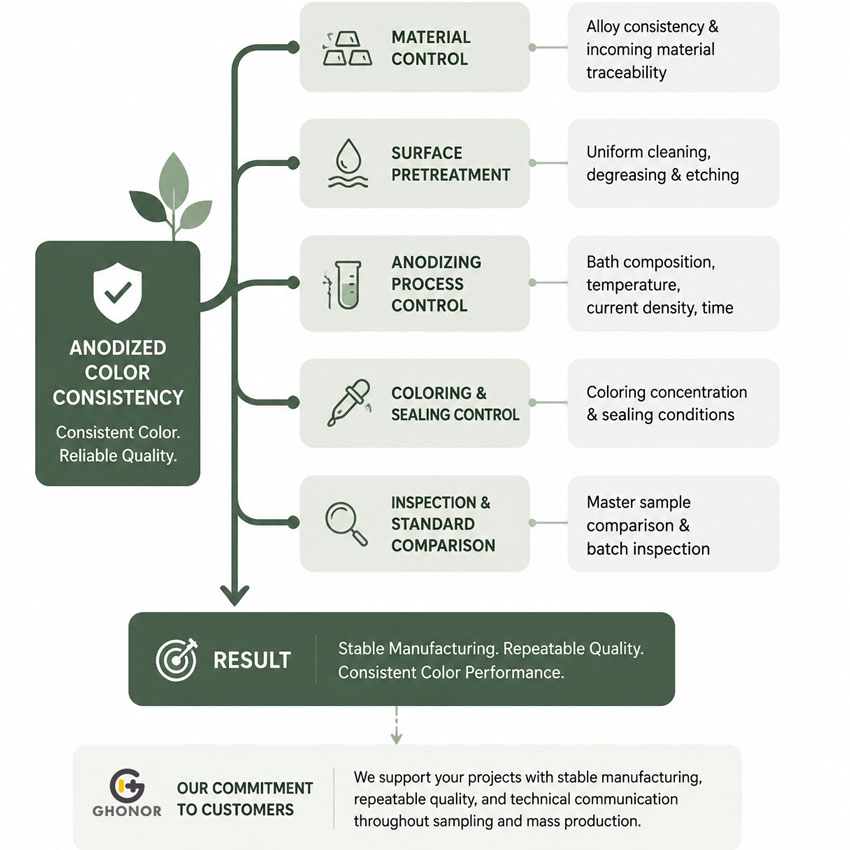
At Ghonor factory, a disciplined manufacturing process is strictly conducted to control anodized aluminum surface. We constently stay focus on stablizing raw material selection, uniforming surface pretreatment, controlling anodizing parameters, managing consistent coloring conditions, and carrying out standardized inspection against approved master samples.
If you are searching for a reliable supplier of anodized aluminum decorative profiles with reliable surface treatment consistency in repeatable quality, and experienced export manufacturing support, we are here to meet your specified needs.
The Importance of color consistency in anodized aluminum profiles
Anodized aluminum is widely used in creating durable decoration scenes, either commercial or residential. It has a clean metallic appearance, excellent corrosion resistance, and can often achieve high-end decorative effects.
However, in the implementation of various projects, the consistency of appearance and technical performance are equally important. When anodized aluminum profiles are used in building facades, interior decorative strips, doors and windows, or decorative lines, their color must remain stable across different batches, production dates, and installation areas.
Only in this way can a consistent installation effect be achieved over the long term or in medium and large-scale interior decoration projects.That is why color control is not a secondary concern. It is a core part of quality control.
According to the relevant national standards, color difference and appearance quality of anodic oxide coatings should be tested under defined conditions, using standardized methods and approved reference samples.
Ghonor approach to anodizing color control
We manage anodizing color consistency through a full-process quality system. This includes:
· Incoming material traceability.
· Alloy consistency control.
· Uniform surface pretreatment.
· Stable anodizing bath management.
· Controlled coloring and sealing conditions.
· Master sample comparison.
· Batch-by-batch inspection.
This approach helps us reduce visible variation and maintain a more stable final appearance for decorative aluminum profiles used in global projects.
1. Stable raw materials
The final anodized color starts with the substrate. Alloy type, batch condition, and extrusion consistency all influence how the surface reacts during anodizing.
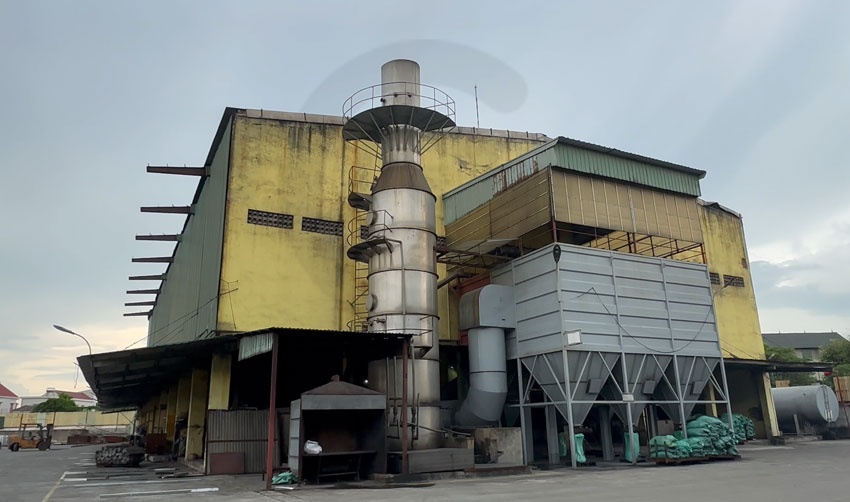
To improve color stability, we set up our own casting line to keep material traceability under control and avoid unnecessary mixing of inconsistent raw material sources within the same project. This helps reduce unwanted variation before the surface treatment even begins.
2. Uniform surface pretreatment
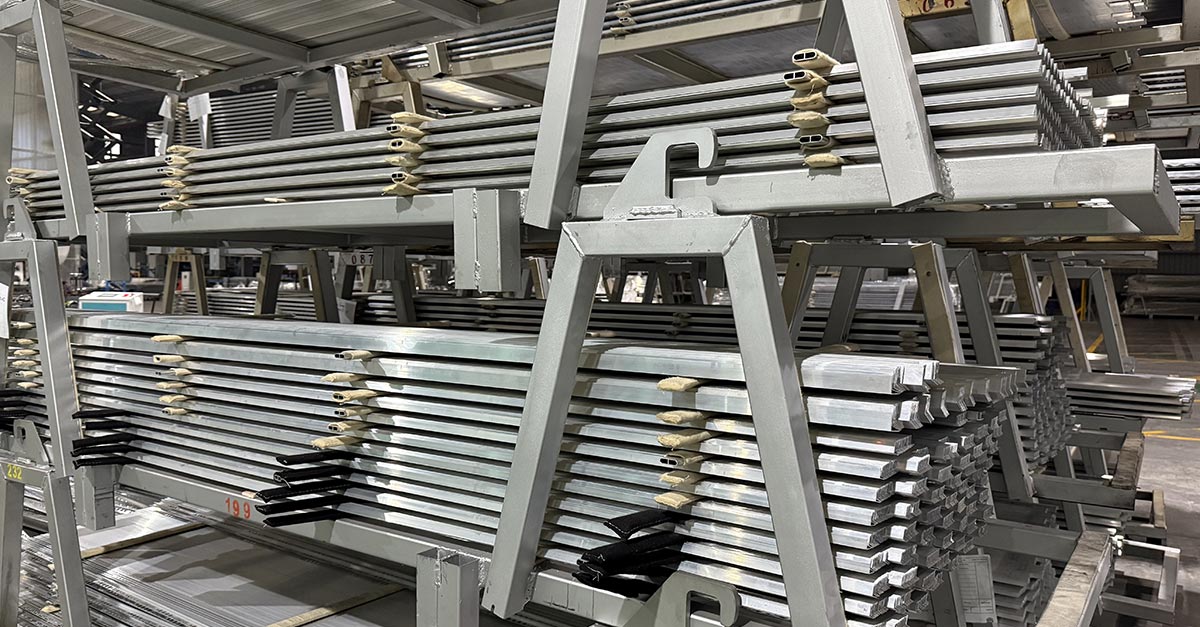
Before anodizing, the profile surface must be cleaned and prepared in a controlled way. Each process such as degreasing, etching, decontamination and surface activation will affect the appearance of the final coating.
If the pre-treatment is not uniform, the formation of the oxide film in different areas may vary. That can lead to visible color deviation after coloring and sealing. For this reason, pretreatment stability is one of the most important steps in our process.
3. Controlled anodizing parameters
The anodizing stage directly influences film formation and surface appearance. The composition of the oxidation pool solution, the temperature inside the pool, the current density and the processing duration all have an impact on the final result.
Even slight fluctuations in these parameters can lead to differences in brightness, hue or the uniformity of surface color adhesion. Therefore, we strictly control the processes on the anodized lines to ensure the repeatability of the output results during sample operation and large-scale production.
4. Consistent coloring and sealing
For colored anodized profiles, the coloring process must also remain stable. The dye concentration, soaking time, oxidation tank conditions, and sealing parameters all affect the final color.
Any slight change in these factors can lead to significant deviations in the final surface effect. Therefore, we consider coloring and sealing as crucial quality control steps, rather than just surface treatment procedures.
5. Master sample approval
A clear master sample is essential for any anodized aluminum project. It gives both the factory and the customer a shared visual reference before mass production begins.
Official standards also emphasize that the reference sample should have a uniform and stable appearance without obvious defects, and it should be properly stored to preserve its reference value.
By comparing production results with the approved master sample, we can maintain better consistency and reduce the risk of misunderstanding during order execution.
6. Standardized inspection
Color evaluation should not depend on personal judgment alone. It should follow a consistent inspection method.
We usually reach an agreement with our clients to use standardized methods for measuring the color differences and appearance quality of the anodic oxide coatings and organic polymer coatings on aluminum and aluminum alloys.
In actual operation, the inspection will be conducted under controlled lighting conditions, using appropriate reference samples and, if necessary, equipped with appropriate measuring equipment. The standardized methods ensure that the assessment results of our products from different production batches are consistent, gaining the clients' recognition and establishing long-term trust.
Typical applications
Our anodized aluminum decorative profiles are suitable for applications such as:
· Architectural aluminum trim and decorative profiles.
· Interior aluminum tile trims.
· Window and door decorative sections and frames.
· Commercial building finishing systems.
· Export-oriented project orders.
For these applications, customers usually care about both appearance consistency and supply stability. Our manufacturing system is built to support both.
What customers gain from our process
When color control is handled properly, customers benefit in several ways:
· Better visual consistency across orders.
· Lower risk of color mismatch during installation.
· More reliable sample-to-mass-production matching.
· Clearer communication during approval and production.
· More stable results for export and project-based supply.
In decorative aluminum applications, consistent color is not just about appearance. It also reflects the professionalism of the supplier and the quality discipline behind the product.
Why customers choose Ghonor factory
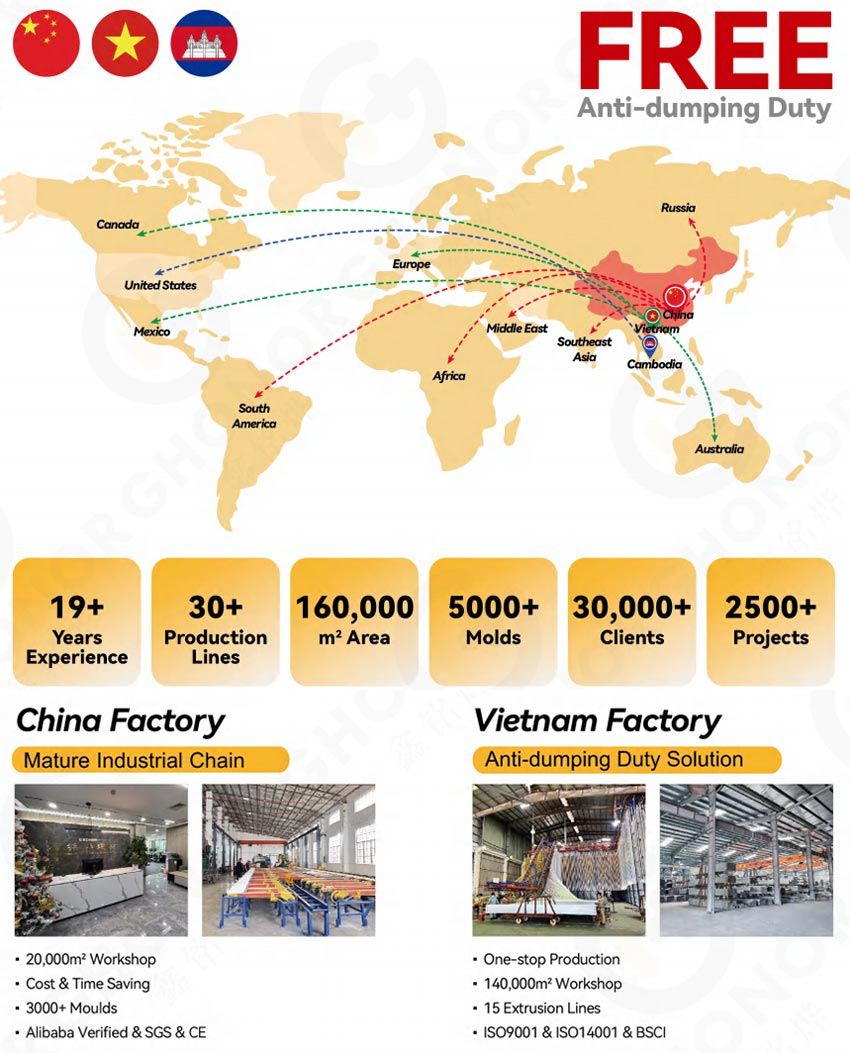
We support global customers with a manufacturing approach focused on repeatability, quality discipline, and technical communication. From sample approval to mass production, we pay attention to the details that influence anodized color consistency.
Our goal is to provide anodized aluminum decorative profiles that are not only attractive, but also stable in production and reliable in project use.
FAQ
1. How do you control anodized aluminum color consistency?
We control it through stable raw materials, uniform pretreatment, controlled anodizing parameters, consistent coloring and sealing, approved master samples, and standardized inspection.
2. Can anodized aluminum colors vary between batches?
Yes, they can if material conditions or process parameters change. That is why batch control and master sample comparison are important in production.
3. Do you provide color matching before mass production?
Yes. We use approved master samples as the production reference before starting mass production.
4.What types of projects are suitable for your anodized decorative profiles?
They are suitable for architectural projects, interior decoration, window and door systems, commercial buildings, and export orders.
5. How do you inspect color quality?
We follow standardized color difference and appearance inspection methods based on relevant national testing logic and approved reference samples.
Copyright © Foshan Golden Honor Decorative Material Co., Ltd.All Rights Reserved
Sitemap | Technical Support: