
Bath chemistry, temperature, and process time are the 3 main factors that are undeniably important for the anodization of decorative aluminum extrusion profiles. However, they do not work alone. The hanging fixture design also act as a crucial factor in color consistency, coating uniformity, and surface quality.
For high grade appearance aluminum products, even a slight difference in electrical contact or spacing can create visible quality issues. That is why fixture design should be treated as part of the anodizing process itself, not just as a simple support tool.
What anodizing depends on
Anodizing is an electrochemical process. If the electric current enters the aluminum surface unevenly, the oxide film formed on the surface will develop unevenly.
· Coating thickness variation.
· Color difference across the surface.
· Localized dullness or spotting.
· Inconsistent appearance between batches.
As a result, a repeatable decorative effect should be built on a stable electrical contact. When the contact is unstable, the surface treatment effect is often unpredictable.
Why fixture design matters
Fixture design affects how current flows into batches of aluminum raw materials and how the materials are positioned during processing.
A good fixture does two things simultaneously: it facilitates efficient current flow and protects parts from damage.
If the hanging method creates weak or unstable contact, current distribution becomes uneven. If the parts are too close together, they may rub, collide, or trap chemical residues in ways that affect the final finish. For decorative aluminum products, both problems are decisive.
That means the fixture is not only a carrying tool. It is a quality control point.
Problems with traditional wire hanging
Traditional aluminum wire hanging is widely used in anodizing operations. It is simple, familiar, and low cost. However, for decorative aluminum parts, it has several practical limitations.
First, electrical contact may be unstable. If the contact point shifts or does not conduct well, the current distribution becomes uneven. Second, the individual profile may have a slight move during processing, especially when it is suspended in a bath. Third, the profiles can rub against each other or collide, which increases the risk of scratches and surface damage.
These issues are often acceptable in low-appearance applications. But they become much more serious when surface quality is a priority.
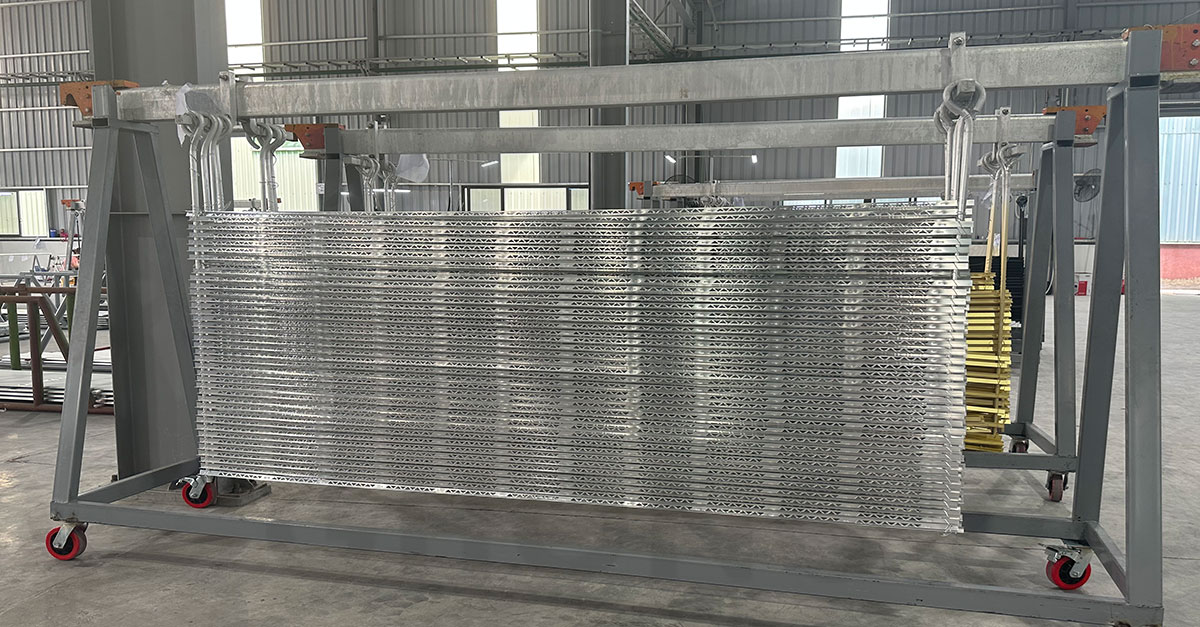
Our upgraded cage-style fixture solution
To address these challenges, we took a more forward-looking approach and developed an upgraded cage-style fixture system using pure copper and pure aluminum components. This was not just a routine equipment change. This is a well-thought-out process innovation based on long-term production experience and a clear understanding of the actual needs of decorative aluminum customers: consistent quality, fewer defects, and reliable delivery.
The main advantages are:
· Better electrical conductivity.
· More stable current flow.
· More uniform oxide film formation.
· Reduced movement during processing.
· Less part-to-part contact.
By improving the electrical connection, the fixture helps the anodizing process perform more consistently. At the same time, the cage-style structure provides better support for each decorative aluminum blank.
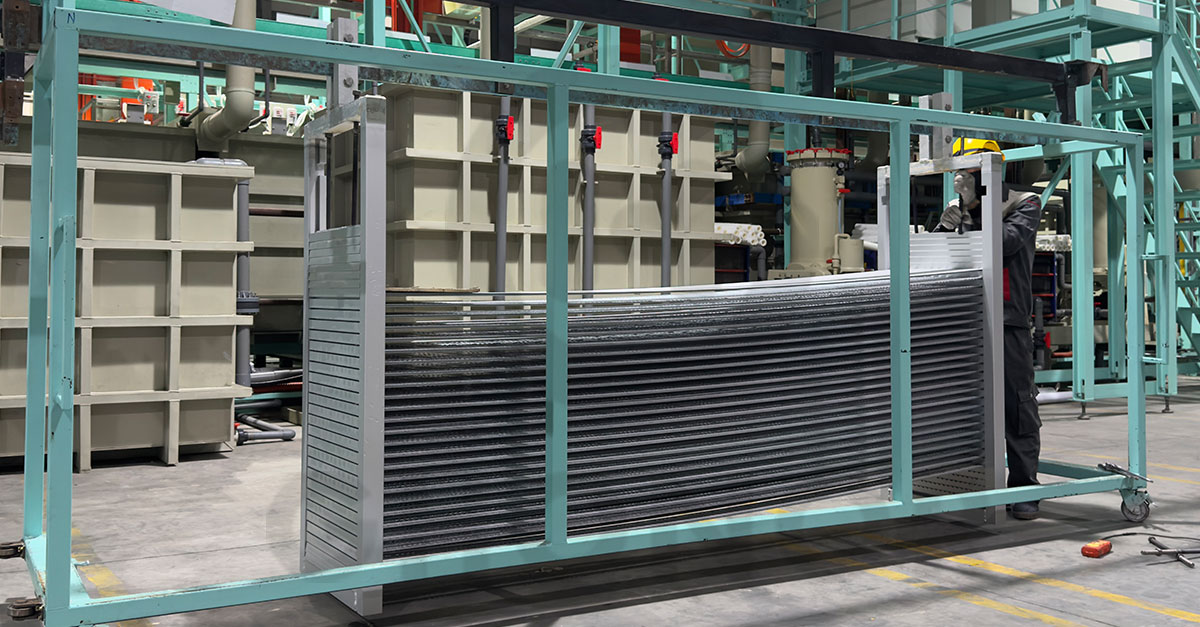
Ghonor unique approach
What sets our method apart is not only the fixture design itself, but also the way we have built the entire production environment around quality stability.
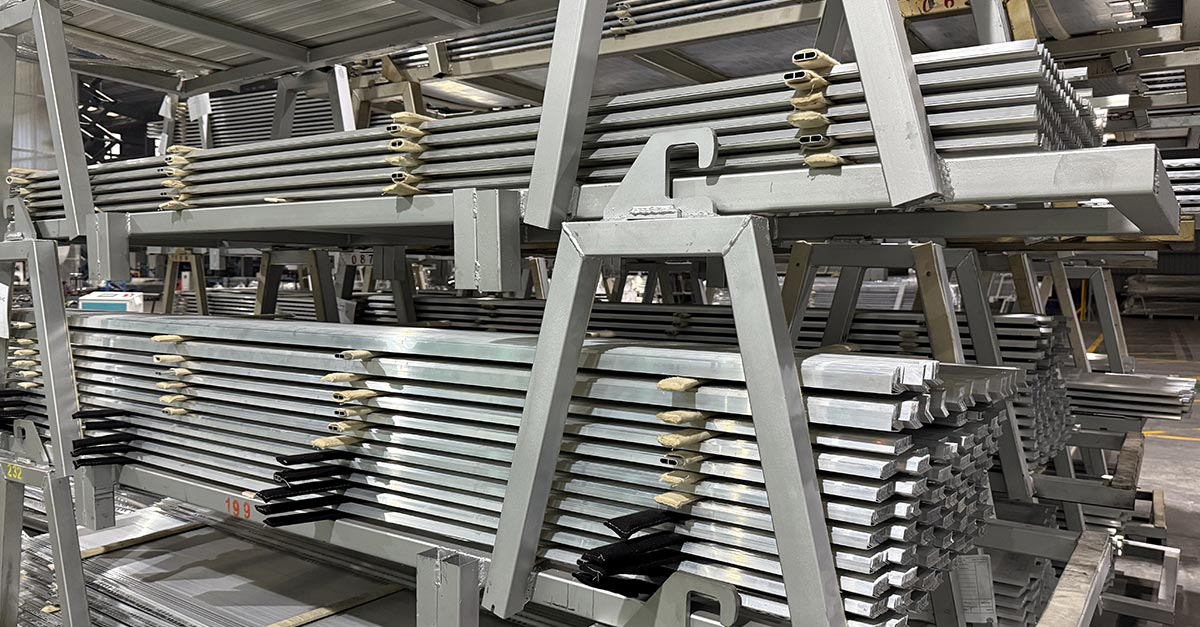
We deliberately maintain a larger plant layout and more spacious storage and handling areas for freshly extruded blanks. This gives us more room to organize, buffer, and manage materials before anodizing. As a result, we can reduce the risk of scratches caused by collision or improper stacking before the parts even enter the oxidation stage.
For potential clients, this means our QC starts way earlier than the anodizing tank. We do not wait for defects to appear and then try to fix them later. We focus on preventing them from the beginning.
That is one of the reasons customers choose us as a long-term supplier: they are not only buying aluminum products, but also buying a more stable and more reliable production system.
Why spacing storage matters
One of the most common causes of surface damage is direct contact between profiles. When blanks are put too close between each other or insufficient spacing, they may come into contact during the process, resulting in scratches, dents, or other visible defects.
The layered cage-style fixture creates dedicated spacing for each blank. This allows every part maintain its own position and helps prevent direct contact. Therefore the risk of mechanical damage is reduced, and the overall scrap rate can be lowered and well-controlled.
This is especially important for decorative products, as even minor surface marks can affect buyer’s acceptance.
Benefits for high-appearance applications
For customers who require a premium surface finish, fixture design has a direct impact on quality and cost control.
A better fixture system can help achieve:
· More uniform anodic oxide films.
· Improved color consistency.
· Fewer scratches and collision marks.
· Lower rejection and rework rates.
· Better batch-to-batch stability.
This is especially valuable for architectural decoration, interior design, visible outlines, and other applications that emphasize visual consistency.
Practical experience from production
In real production, many anodizing defects are not caused only by the chemical bath. They often begin earlier, during material storage, handling, hanging, and contact setup. If the conductive path is unstable or the spacing is poorly designed, these defects will be reflected in the final surface quality.
Therefore, we pay close attention to fixture structure innovation, contact stability, factory layout, and raw material/semi-finish product arrangement. Details may seem insignificant, but they often combined together would determine whether the final result meets customer expectations.
Our view is simple: a dependable supplier should not only deliver products. A dependable supplier should possess the foresight to improve equipment, a rigorous attitude towards controlling material handling processes, and a sense of responsibility to mitigate risks before defects impact customers.
How to improve anodizing consistency
If your goal is better and stable anodizing consistency, focus on the followings:
1. Improve electrical contact quality.
2. Keep contact points clean and stable.
3. Use fixture designs that support even current distribution.
4. Maintain clear spacing between parts.
5. Reduce part movement during processing.
6. Provide enough storage and handling space before anodizing.
These steps help reduce color variations, surface defects, and waste. They also improve repeatability, which is especially important for decorative aluminum products.
Common applications
This type of fixture improvement is especially useful for products that require a clean and consistent appearance, such as:
· Architectural aluminum profiles.
· Decorative aluminum components.
· Interior trim parts.
· Visible surface elements.
· High-end finishing products.
In these applications, quality is judged not only by function, but also by appearance. That is why process stability matters so much.
Why customers choose us
As an importer, supplier selection is not solely about price. It is about whether the supplier can provide consistent quality, stable delivery, and a reliable long-term partnership.
By proactively upgrading our oxidation fixture design and maintaining a larger, better-organized plant environment, we have built a production system aimed at reducing pre-oxidation damage, lowering defect rates, and improving surface pass rates. This is not a short-term adjustment. It is part of our long-term commitment to quality.
When customers choose Ghonor, they gain more than a product. They gain a supplier that thinks ahead, acts early, and invests in process stability to support their business over a long time.
Conclusion
In decorative aluminum anodizing, fixture design is more than a support detail. It directly affects current distribution, oxide film uniformity, color consistency, and surface protection.
By upgrading from traditional wire hanging to a pure copper and pure aluminum cage-style fixture, and by managing materials in a more spacious and controlled production environment, we can improve conductivity, reduce scratches, and achieve more stable anodizing quality.
For customers who value reliability, professionalism, and long-term supply stability, this kind of process improvement makes a real difference.
FAQ
1. What kinds of aluminum alloy products are suitable for your anodizing process?
Our one-stop anodization process is especially for decorative aluminum extrusion products that require a clean appearance, stable color, and consistent surface quality. It is a good choice for clients who care about both visual effect and production stability.
2. Can you support custom requirements for different surface appearance standards?
Yes. We understand different customers from different regions may have different requirements regarding gloss, color consistency, surface finish, and defect control. We can adjust our production methods according to product applications and customer expectations.
3. Why customers choose your factory as a long-term supplier?
Customers choose us as we focus on both production, and process stability, material handling, and defect prevention. We take a proactive approach to quality and work to reduce problems before they reach the customer.
4. How do you help reduce quality risk for high-appearance products?
We reduce risk through better fixture design, improved handling space, and more controlled material storage before anodizing. This helps us lower the chance of scratches, contact marks, and surface defects.
5. Can you provide stable quality for repeat orders?
Yes. Stable repeat quality is one of our key priorities. We place great emphasis on fixture consistency, production control, and process management to support long-term order stability.
6. Do your clients have stringent requirements regarding appearance?
Yes. Many of our clients operate in application areas with extremely high appearance requirements. We frequently handle projects with stringent requirements for surface consistency, defect control, and batch stability.
7. Which types of clients benefit most from working with your factory?
Our production services are suitable for clients who want reliable suppliers, consistent product quality, and understand the importance of long-term process control.
8. How to work on a project with your team?
You can share your product drawings, surface treatment requirements, application scenarios, and order expectations with us. Our team will review the details and propose a suitable production plan based on your needs.
Copyright © Foshan Golden Honor Decorative Material Co., Ltd.All Rights Reserved
Sitemap | Privacy Policy | Technical Support: