
Choosing the wrong factory for aluminum extrusion tooling can cost you weeks and significantly increase your tooling cost. If your project is custom or small‑batch, a capable small/mid factory often wins on speed and flexibility. If your project requires ultra‑tight tolerances or very large volumes, a big factory usually delivers lower per‑unit cost and greater production stability.
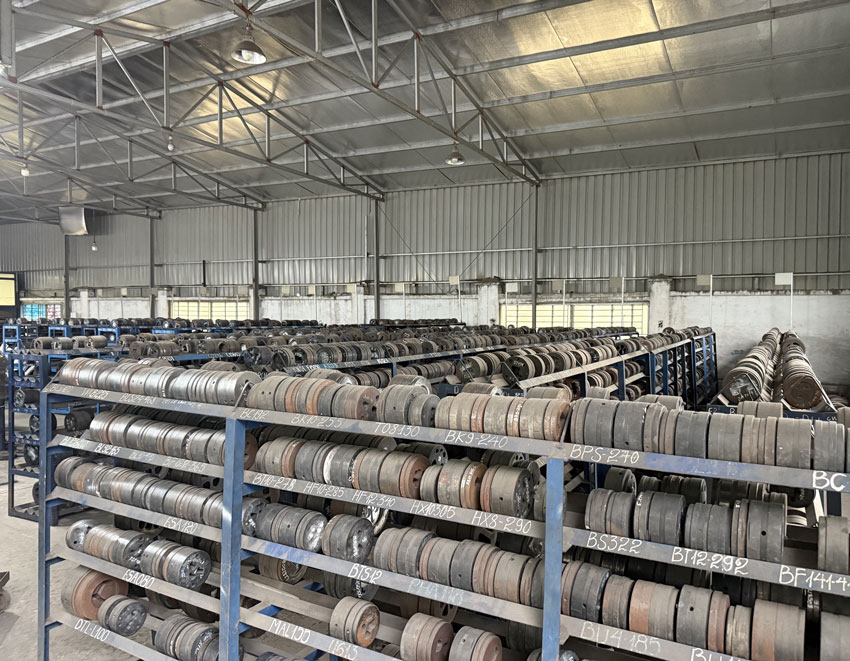
We started as a small aluminum extrusion shop—and grew into a trusted tooling partner for EU and US customers. Today we manage over 5,000 extrusion dies and handle full in‑house aluminum profile design, aluminum extrusion tooling, and aluminum profile processing in Vietnam.
Why this matters: our hands‑on experience shows the real trade-offs buyers usually miss:
- When to pick a small/mid factory: custom, small‑batch projects where fast iteration and flexible tooling development beat scale. We’ve delivered repeatable success on nail gun magazines and construction brackets using agile tooling and profile design tooling.
- When to pick a big factory: high‑volume, standardized runs or ultra‑tight tolerances where advanced extrusion tooling equipment and automation lower per‑unit cost.
- How to manage risk: complex profiles need stronger tooling capability; production continuity favors larger firms. Mitigate small‑factory risk by contract clauses on tooling ownership, as‑built drawings, and material/quality specs.
Proof of capability
- 5,000+ tooling sets (extrusion dies) developed and locally manufactured in Vietnam.
- Long‑term contracts with multiple European and North American manufacturers.
- Full in‑house control from profile design and tooling development to aluminum profile processing and volume production.
Practical checklist (use when evaluating suppliers)
1. Send drawings: does the supplier provide honest feasibility feedback?
2. Ask for tooling history: how many similar extrusion dies have they produced?
3. Verify tooling ownership and document handover terms in the contract.
4. Confirm material sourcing and quality-control steps for aluminum profile processing.
5. Compare quoted aluminum extrusion tooling cost across your MOQ and long‑run scenarios.
Quick FAQ (for engineers & buyers)
Q: How do I know if my profile requires high-end tooling?
A: If tolerances are tight, wall thickness varies significantly, or geometry is complex (multi-cavity, thin fins), you likely need advanced extrusion tooling capability.
Q: Is aluminum extrusion tooling cost always cheaper with big factories?
A: Not always. Big factories reduce unit cost at scale, but small/mid factories can be more cost-efficient for low MOQ or iterative development.
Q: What is the biggest risk with smaller factories?
A: Stability and continuity. This can be mitigated by contract terms—especially tooling ownership and technical documentation.
Q: What should I send for evaluation?
A: 2D/3D drawings, alloy requirement, tolerance, surface finish, and estimated annual volume.
If you’re evaluating a tooling partner for aluminum extrusion tooling or aluminum profile processing, Ghnor can review one part/drawing and give a blunt assessment (small shop vs large factory). Comment or DM to request a review.
Copyright © Foshan Golden Honor Decorative Material Co., Ltd.All Rights Reserved
Sitemap | Privacy Policy | Technical Support: